NSE7_SSE_AR-26 Fortinet NSE 7 - FortiSASE 26 Architect Questions and Answers
An SD-WAN member is no longer used to steer SD-WAN traffic. The administrator updated the SD-WAN configuration and deleted the unused member. After the configuration update, users report that some destinations are unreachable. You confirm that the affected flow does not match an SD-WAN rule. What could be a possible cause of the traffic interruption?
Refer to the exhibit. The exhibit shows the details of a session and the index numbers of some relevant interfaces on a FortiGate device that supports hardware offloading. Based on the information shown in the exhibits, which two conclusions can you draw? (Choose two.)
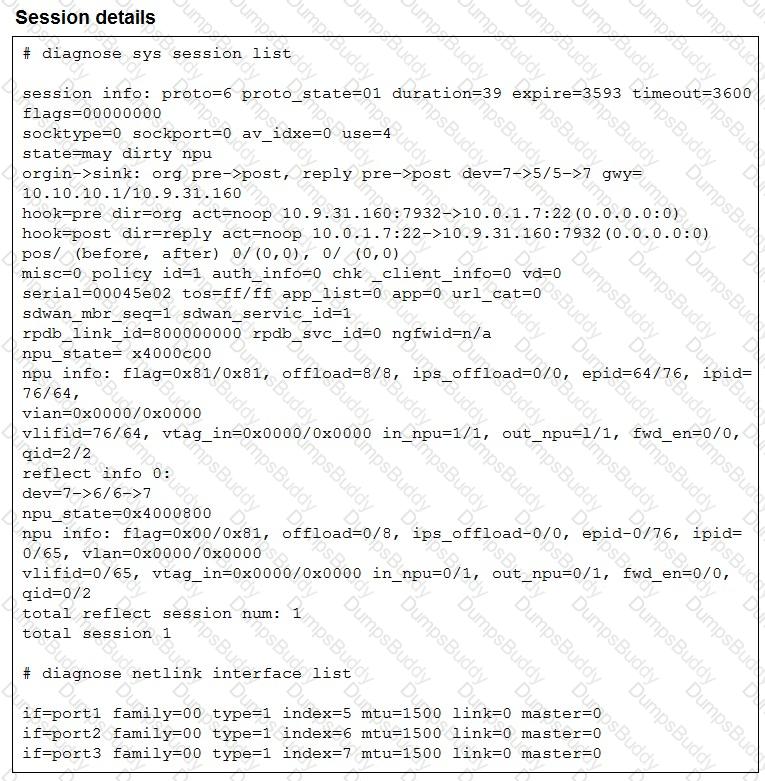
Exhibit 1
Refer to the exhibit. An administrator configures SD-WAN rules for a DIA setup using the FortiGate GUI. The page to configure the source and destination part of the rule looks as shown in the exhibit. The GUI page shows no option to configure an application as the destination of the SD-WAN rule Why?
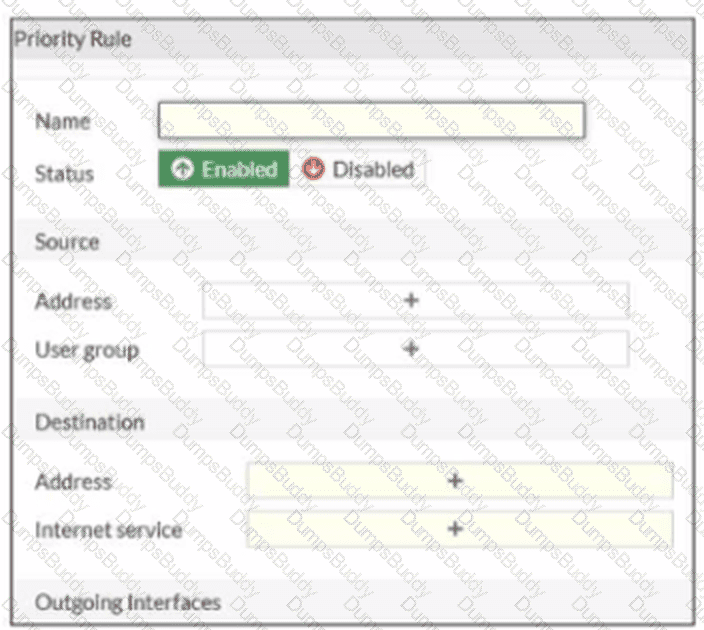
Exhibit 1
Refer to the exhibit that shows a diagnose output on FortiGate. Based on the output shown in the exhibit, what can you say about the device role and how it handles health checks?
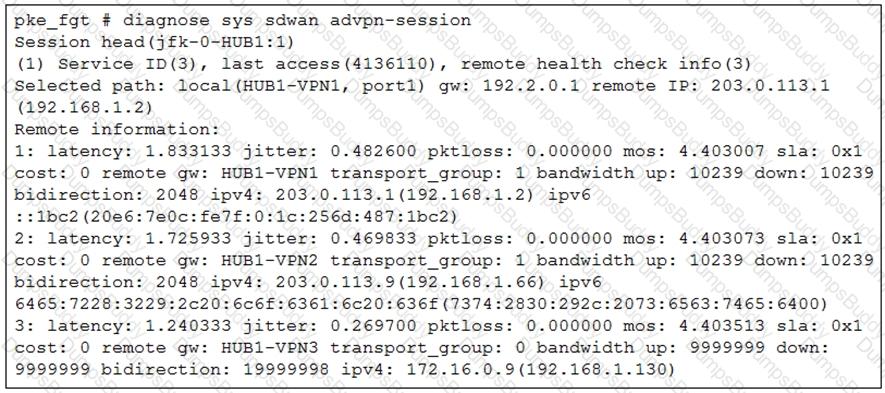
Exhibit 1
Refer to the exhibit. For your ZTP deployment, you review the CSV file shown in exhibit and note that it is missing important information. Which two elements must you change before you can import it into FortiManager? (Choose two.)

Exhibit 1
Refer to the exhibits. The exhibits show an SD-WAN event log, the member status, and the SD-WAN rule configuration. Which two conclusions can you draw from the information shown? (Choose two.)
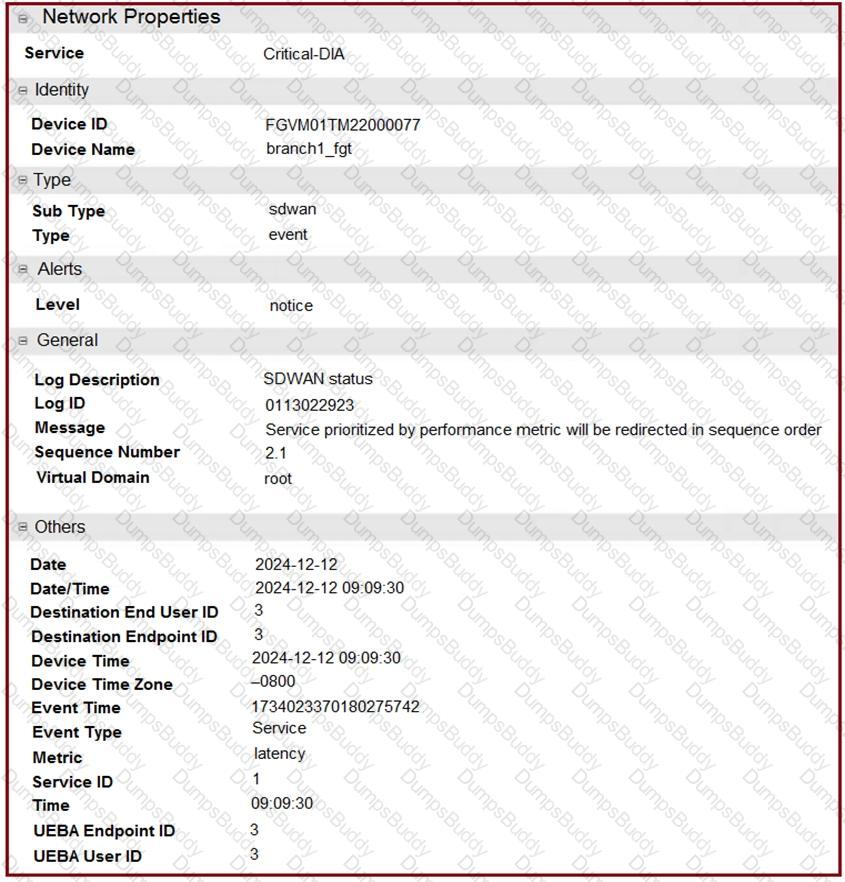
Exhibit 1
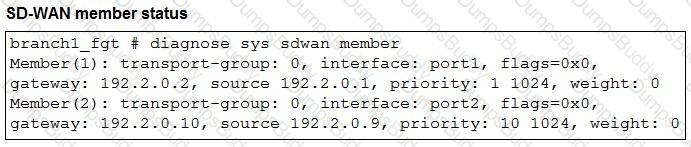
Exhibit 2
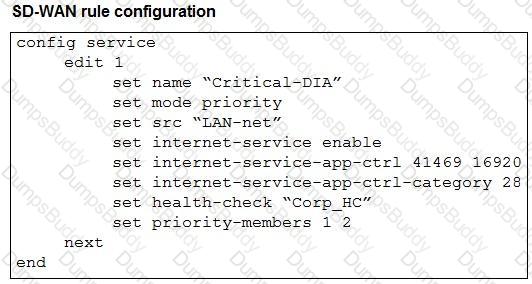
Exhibit 3
Refer to the exhibit. Which statement best describe the role of the ADVPN device in handling traffic?
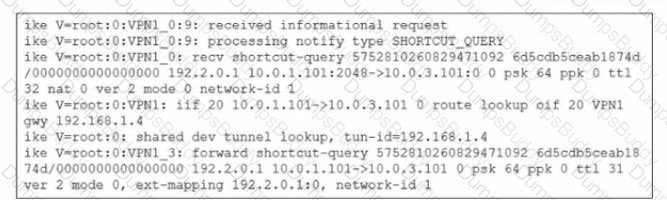
Exhibit 1
Refer to the exhibit.
Which SD-WAN rule and interface uses FortiGate to steer the traffic from the LAN subnet 10.0.1.0/24 to the corporate server 10.2.5.254?
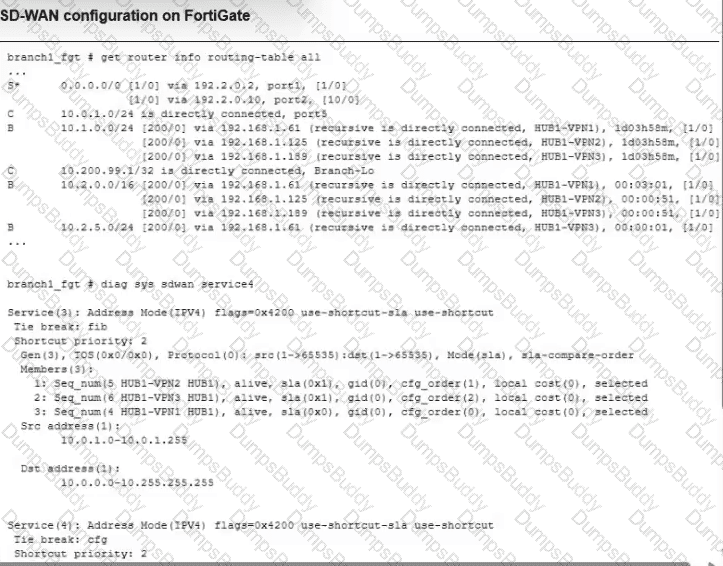
Exhibit — SD-WAN rule and routing outputs
You want FortiGate to use SD-WAN rules to steer local-out traffic. Which two constraints should you consider? (Choose two.)
You are configuring SD-WAN to load balance network traffic and you want to take into account the link quality.
Which two facts should you consider? (Choose two.)
You are using the FortiManager SD-WAN monitor menus to check the status of an SD-WAN topology. When you place the mouse next to branch1_fgt, you receive the output shown in the exhibit. Which two conclusions can you draw from the output shown in the exhibit? Choose two answers.
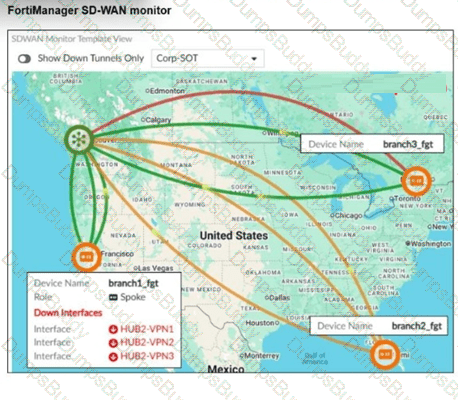
Exhibit 1
Refer to the exhibits. The SD-WAN zones and members configuration of two branch devices are shown. The two branch devices are part of the same hub-and-spoke topology and connect to the same hub. The devices are configured to allow Auto-Discovery VPN (ADVPN). The configuration on the hub allows the initial communication between the two spokes. When traffic flows require it, between which interfaces can the devices establish shortcuts? Choose one answer.
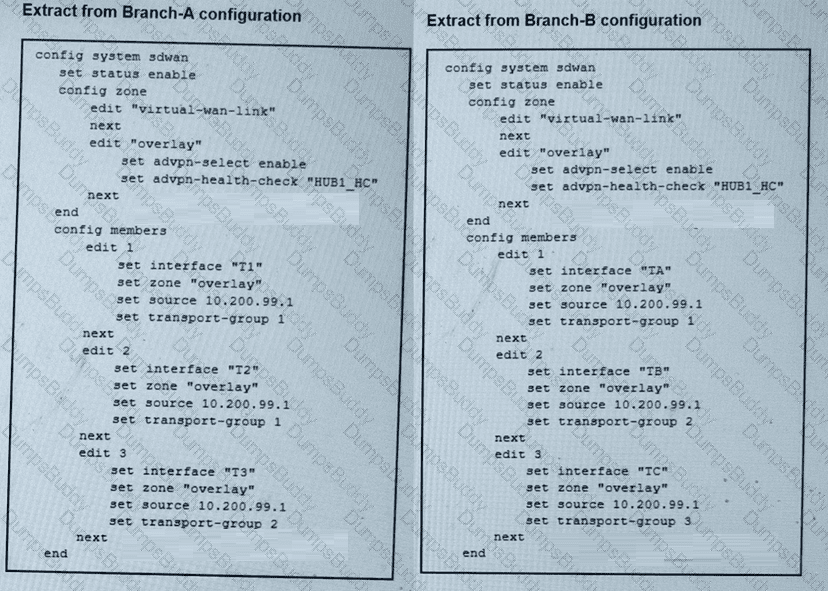
Exhibit 1
Which two components are part of onboarding a proxy-based endpoint for secure internet access (SIA)? (Choose two.)
Which two matching traffic criteria are available to steer traffic in SD-WAN rules?
Refer to the exhibits. The SD-WAN overlay template advanced settings and the underlay and network advertisement settings are shown. These are the configurations for the secondary hub of a dual-hub SD-WAN topology created with the FortiManager SD-WAN overlay orchestrator. Which two conclusions can you draw from the information shown in the exhibits? Choose two answers.
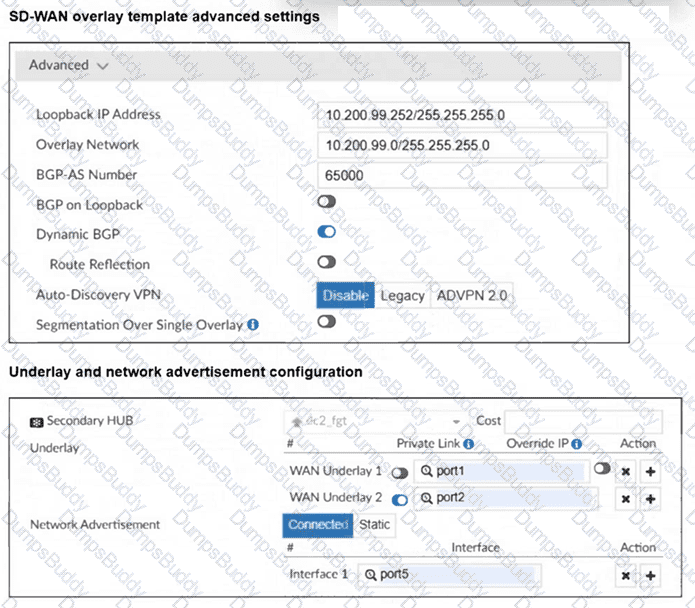
Exhibit 1
Refer to the exhibits.
The administrator increases the member priority on port2 to 20.
Assuming the route egressing port2 is still valid, upon configuration changes and the receipt of new packets.
Which two actions does FortiGate perform on existing sessions established over port2? (Choose two.)
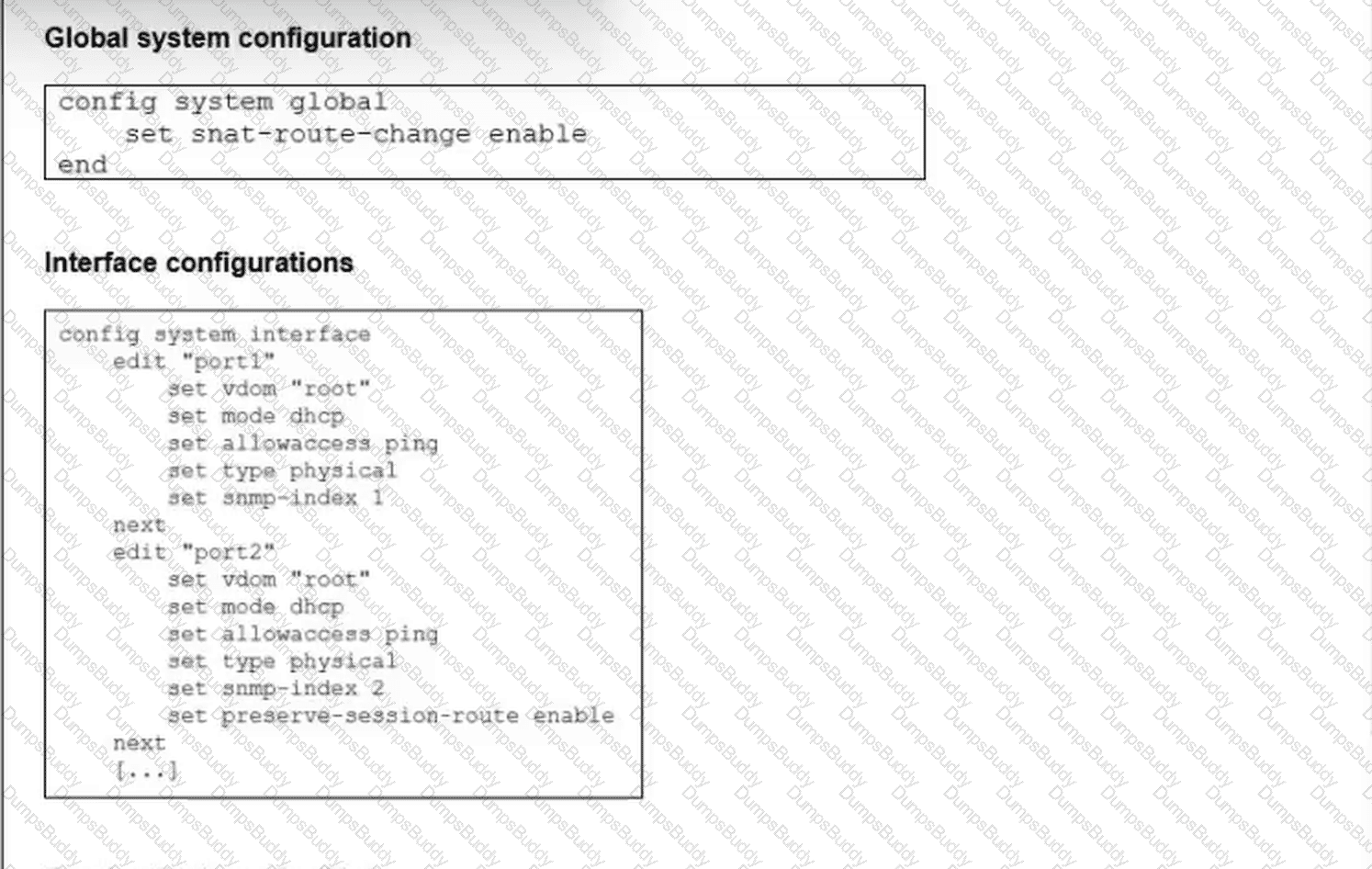
Exhibit 1 — Global system and interface configuration
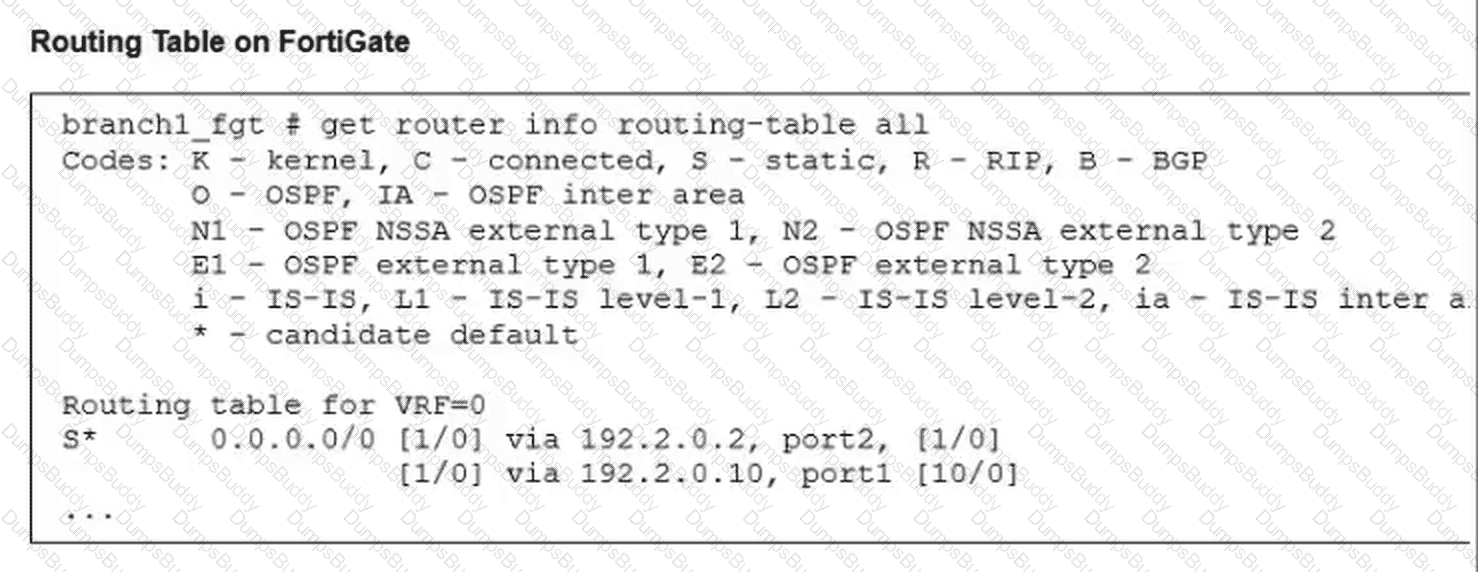
Exhibit 2 — FortiGate routing table
Refer to the exhibit. The administrator configured the SD-WAN rule ID 4 with two members (port1 and port2) and strategy lowest cost (SLA). What are the two characteristics of the session shown in the exhibit? (Choose two.)
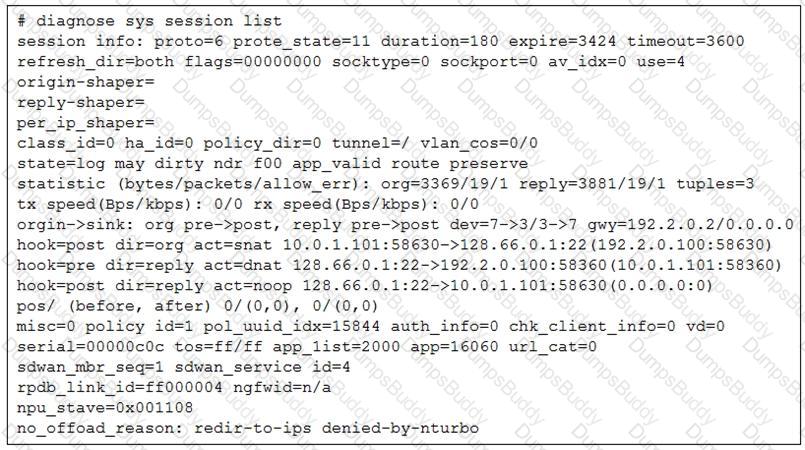
Exhibit 1
Refer to the exhibit. The administrator analyzed the traffic between a branch FortiGate and the server located in the data center, and noticed the behavior shown in the diagram. When the LAN clients located behind FGT1 establish a session to a server behind DC-1, the administrator observes that, on DC-1, the reply traffic is routed overT2. even though T1 is the preferred member in the matching SD-WAN rule. What can the administrator do to instruct DC-1 to route the reply traffic through the member with the best performance?
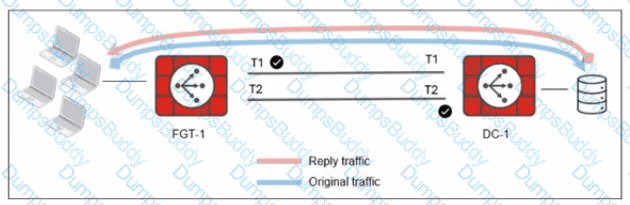
Exhibit 1
An administrator is enforcing endpoint network lockdown using FortiSASE to ensure that devices access the internet only under defined security conditions. The lockdown state must be released automatically when the endpoint meets specific trust or connectivity criteria.
Which two conditions can trigger the release of the network lockdown on an endpoint? (Choose two answers.)
Refer to the exhibit, which shows the SD-WAN rule status and configuration. Based on the exhibit, which change in the measured packet loss will make HUB1-VPN3 the new preferred member?
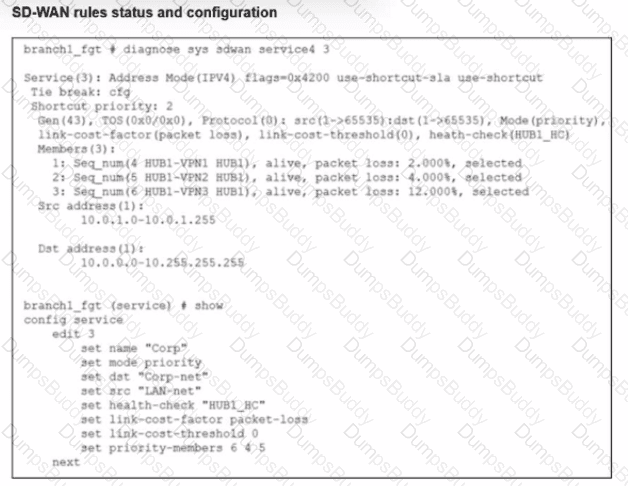
Exhibit 1
Refer to the exhibit. The exhibit shows output of the command diagnose sys sdwan service4 collected on a FortiGate device. The administrator wants to know through which interface FortiGate will steer traffic from local users on subnet 10.0.1.0/255.255.255.192 and with a destination of the social media application Facebook. Based on the exhibits, which two statements are correct? (Choose two.)
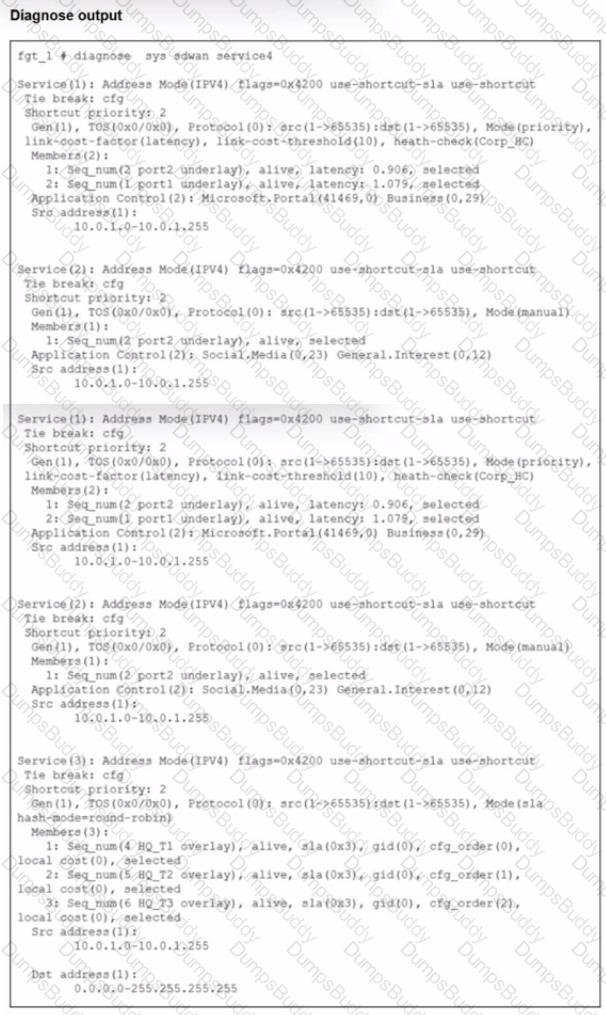
Exhibit 1
In the context of SD-WAN, the terms underlay and overlay are commonly used to categorize links.
Which two statements about underlay and overlay links are correct? (Choose two.)
Which statement describes FortiGate behavior when you reference a zone in a static route?
Refer to the exhibit. What can you conclude from the output shown? Choose one answer.
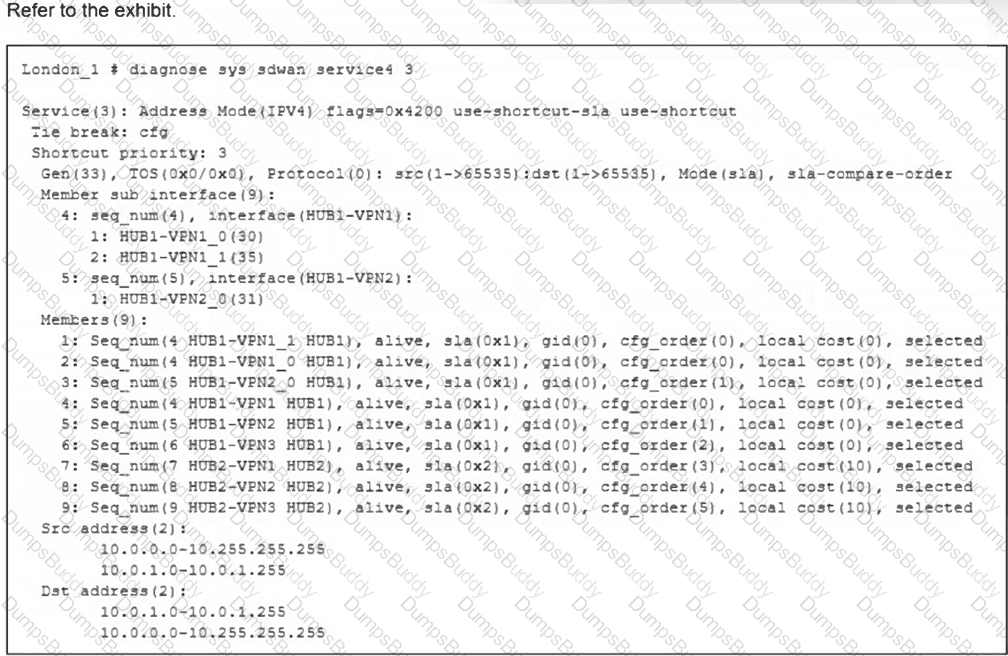
Exhibit 1
In which order does FortiGate consider the following elements during the route lookup process? Choose one answer.
Refer to the exhibits.
You collected the output shown in the exhibits and want to know which interface HTTP traffic will flow through from the user device 10.0.1.101 to the corporate web server 10.0.0.126.
All SD-WAN links are stable.
Which interface will use FortiGate to steer the traffic?
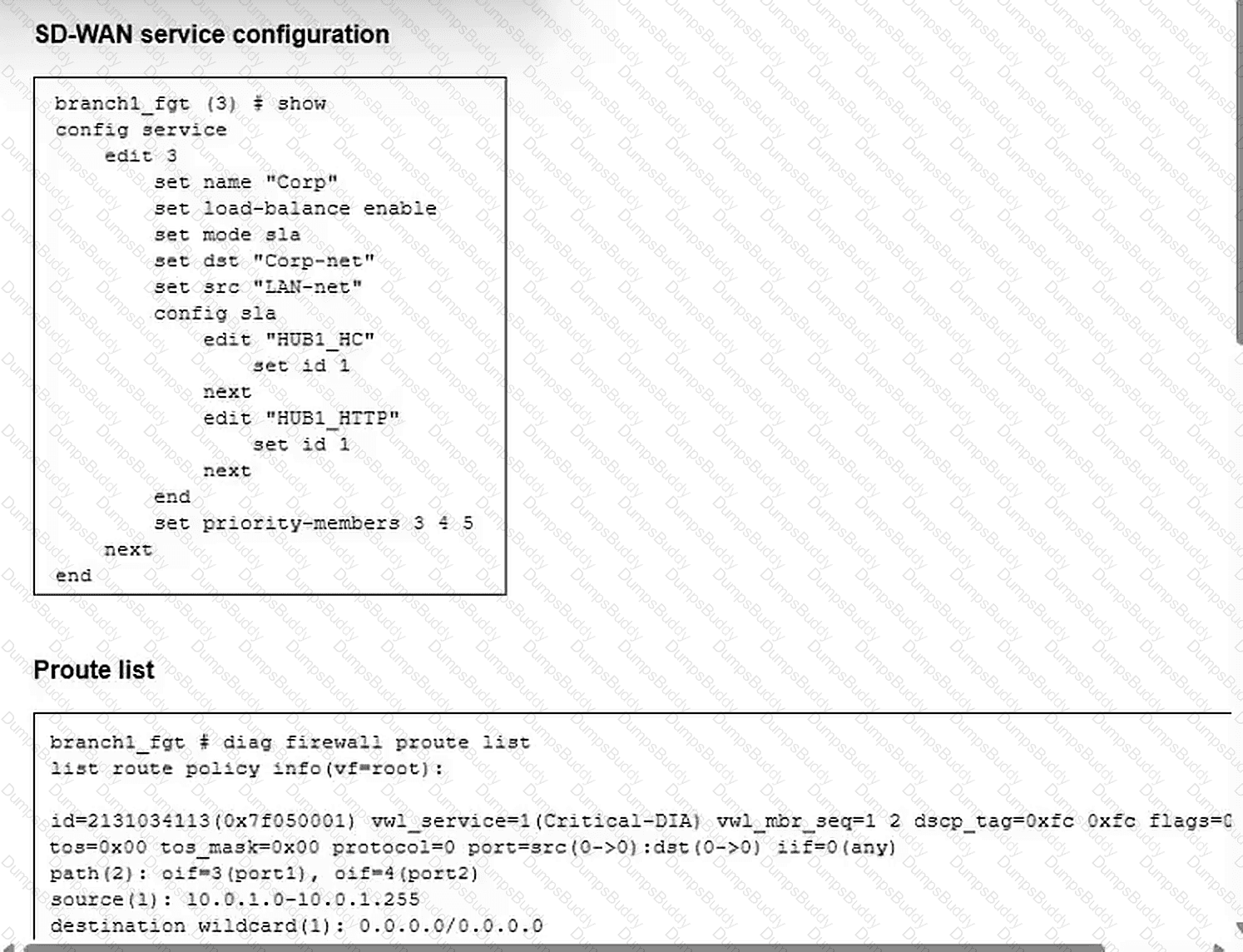
Exhibit 1 — SD-WAN service configuration and route list
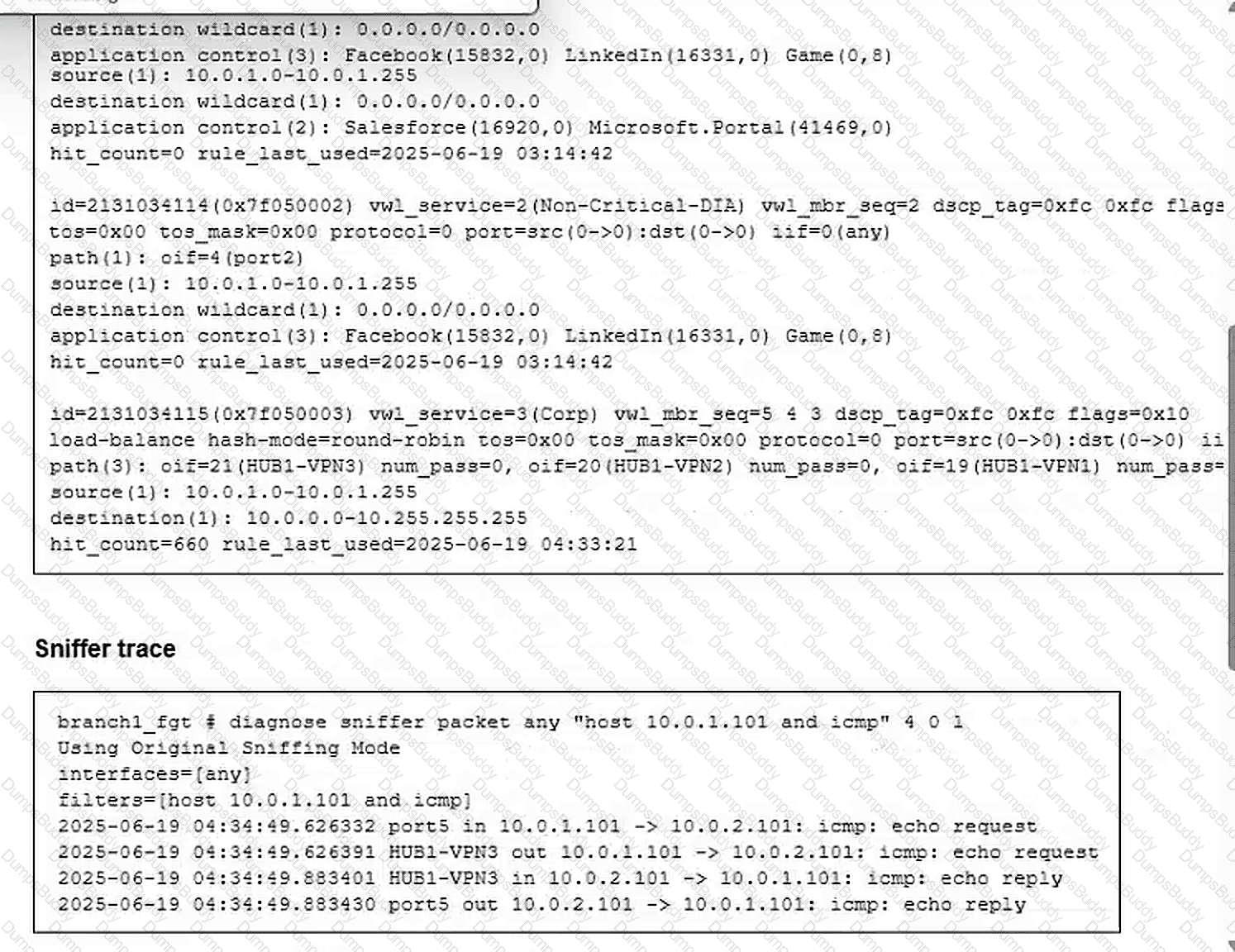
Exhibit 2 — SD-WAN route selection and packet sniffer
Refer to the exhibits. The interface details, static route configuration, and firewall policies on the managed FortiGate device are shown. You want to configure a new SD-WAN zone, named Underlay, that contains the interfaces port1 and port2. What must be your first action?
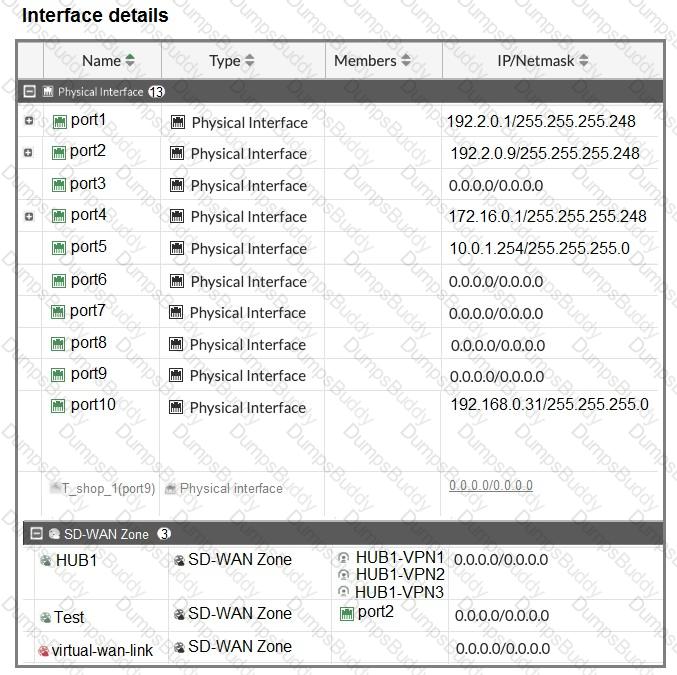
Exhibit 1
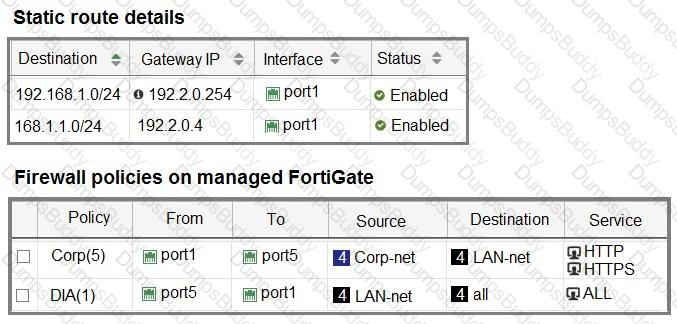
Exhibit 2
An administrator configures the performance service-level agreement (SLA) with the probe mode, Prefer Passive.
What are two observable impacts of this configuration? (Choose two.)
You want to configure two static routes. One that references a zone and the second one that references an SD-WAN member that belongs to that zone.
Which statement about this scenario is true?
Refer to the exhibit. The exhibit shows the health-check configuration on a FortiGate device used as a spoke. You notice that the hub FortiGate doesn’t prioritize the traffic as expected. Which two configuration elements should you check on the hub? (Choose two.)
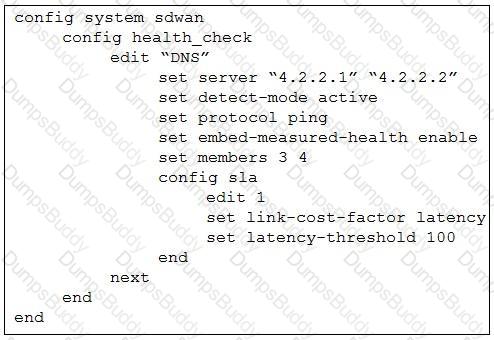
Exhibit 1
PDF + Testing Engine

Testing Engine
PDF (Q&A)