Spring Sale 70% Discount Offer - Ends in 0d 00h 00m 00s - Coupon code: best70

300-220 Conducting Threat Hunting and Defending using Cisco Technologies for Cybersecurity 300-220 CBRTHD Questions and Answers

Questions 4

The SOC team receives an alert about a user sign-in from an unusual country. After investigating the SIEM logs, the team confirms the user never signed in from that country. The incident is reported to the IT administrator who resets the user's password. Which threat hunting phase was initially used?

Options:

A.

Collect and process intelligence and data

B.

Response and resolution

C.

Hypothesis

D.

Post-incident review

Buy Now
Questions 5

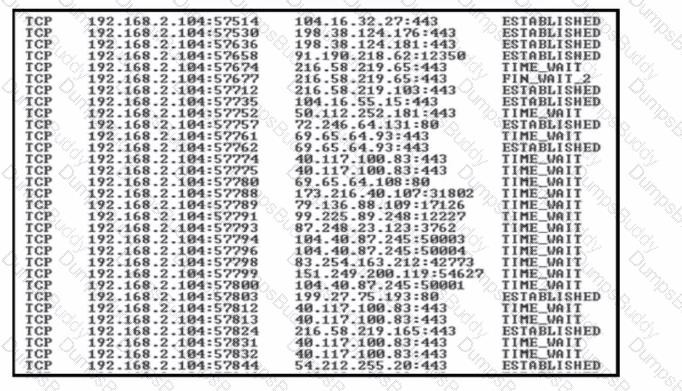
Refer to the exhibit.

300-220 Question 5

A security team detects a spike in traffic from the company web server. After further investigation, the team discovered that multiple connections have been established from the server to different IP addresses, but the web server logs contain both expected traffic and DDoS traffic. Which attribute must the team use to further filter the logs?

Options:

A.

connection status

B.

destination port

C.

IP address of the web server

D.

protocol

Buy Now
Questions 6

While investigating multiple incidents, analysts notice that attackers consistently use SMB for lateral movement and avoid PowerShell execution. Why is this observation valuable for attribution?

Options:

A.

It identifies the exploit used for initial access

B.

It reveals the attacker’s malware development framework

C.

It highlights consistent attacker tradecraft

D.

It confirms data exfiltration techniques

Buy Now
Questions 7

During an investigation, analysts observe that attackers consistently avoid PowerShell logging, disable AMSI, and prefer WMI for execution. Why is this information critical for attribution?

Options:

A.

It identifies the malware family used

B.

It reveals the attacker’s IP infrastructure

C.

It reflects the attacker’s operational preferences

D.

It confirms the exploit used for initial access

Buy Now
Questions 8

A threat hunting team wants to ensure hunts are repeatable, scalable, and less dependent on individual analyst intuition. What is the MOST important process improvement?

Options:

A.

Increasing the number of threat intelligence feeds

B.

Automating alert triage workflows

C.

Standardizing hunt documentation and hypotheses

D.

Blocking all suspicious activity automatically

Buy Now
Questions 9

During multiple intrusions, analysts observe that attackers consistently perform internal reconnaissance before privilege escalation, avoid noisy exploitation, and limit actions to business hours of the victim’s region. Why is this observation important for attribution?

Options:

A.

It confirms the use of a specific exploit kit

B.

It indicates an advanced persistence mechanism

C.

It reveals operational discipline and intent

D.

It identifies the malware command-and-control protocol

Buy Now
Questions 10

What is a limitation of automated dynamic malware analysis tools?

Options:

A.

Vulnerabilities in runtime environments cannot be found.

B.

They produce false positives and false negatives.

C.

All programming languages are not supported.

D.

They are time consuming when performed manually.

Buy Now
Questions 11

After a multi-week threat hunting exercise, a security team confirms that an attacker gained access using valid credentials, moved laterally, and exfiltrated data without deploying malware. Senior leadership asks how the hunting program reduced organizational risk. Which outcome BEST demonstrates the value of threat hunting?

Options:

A.

Identification of the attacker’s IP addresses and domains

B.

Discovery of unknown attacker behaviors and closure of detection gaps

C.

Removal of malicious files from compromised hosts

D.

Resetting credentials for affected users

Buy Now
Questions 12

A SOC team using Cisco security technologies wants to distinguishIndicators of Attack (IOAs)fromIndicators of Compromise (IOCs)during threat hunting. Which scenario BEST represents an IOA rather than an IOC?

Options:

A.

Detection of a known malicious file hash on an endpoint

B.

Identification of a domain listed in a threat intelligence feed

C.

Observation of repeated failed logins followed by a successful login from a new location

D.

Blocking an IP address associated with previous malware campaigns

Buy Now
Questions 13

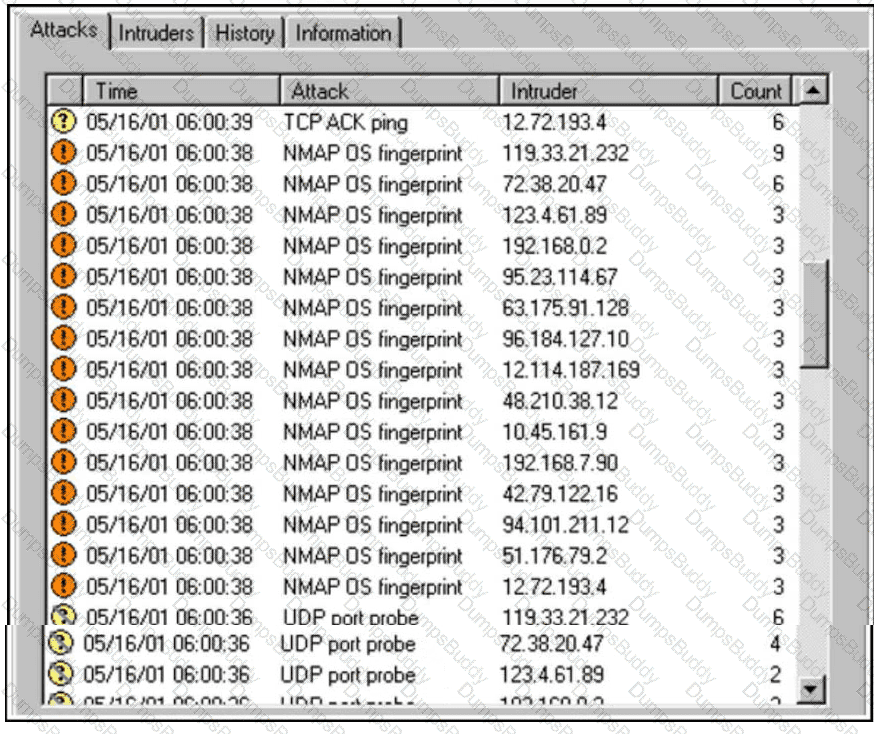
Refer to the exhibit.

300-220 Question 13

An increase in company traffic is observed by the SOC team. After they investigate the spike, it is concluded that the increase is due to ongoing scanning activity. Further analysis reveals that an adversary used Nmap for OS fingerprinting. Which type of indicators used by the adversary sits highest on the Pyramid of Pain?

Options:

A.

UDPs

B.

port probes

C.

network/host artifacts

D.

IP addresses

Buy Now
Questions 14

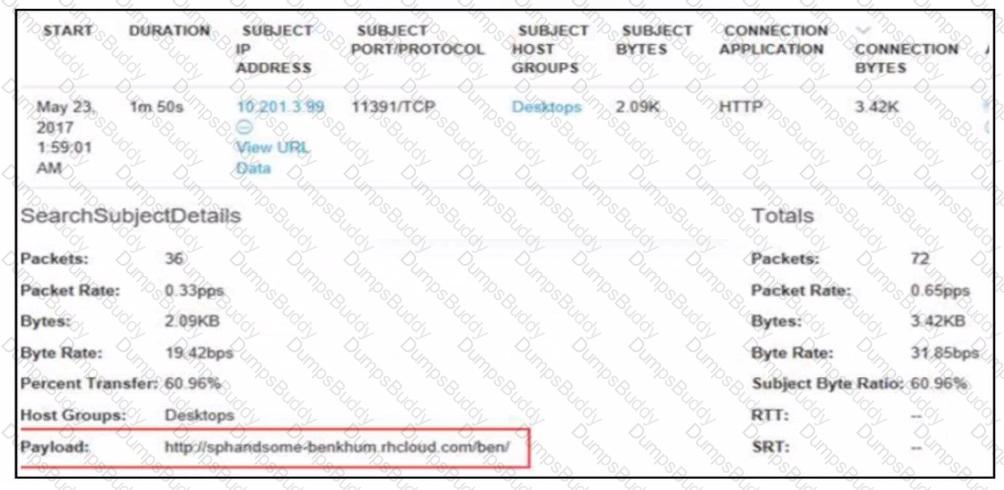
Refer to the exhibit.

300-220 Question 14

A security analyst receives an alert from Cisco Secure Network Analytics (formerly StealthWatch) with the C2 category. Which information aids the investigation?

Options:

A.

The number of packets shows that a C2 communication occurred.

B.

IP address 10.201.3.99 is a C2 server.

C.

Host 10.201.3.99 is attempting to contact the C2 server to retrieve the payload.

D.

The payload describes the address of the zombie endpoint.

Buy Now
Questions 15

During multiple investigations using Cisco telemetry, analysts observe attackers consistently perform internal discovery before privilege escalation and avoid high-risk actions. Why is this observation useful for attribution?

Options:

A.

It confirms the attacker used a known exploit

B.

It reveals the attacker’s malware development skills

C.

It indicates disciplined and methodical tradecraft

D.

It identifies the attacker’s command-and-control server

Buy Now
Questions 16

During a structured hunt, analysts using Cisco SIEM tools complete hypothesis testing and confirm malicious activity. What is the NEXT step in the Cisco threat hunting lifecycle?

Options:

A.

Immediately begin a new hypothesis

B.

Document findings and operationalize detections

C.

Disable all affected user accounts

D.

Escalate the incident directly to executive leadership

Buy Now
Questions 17

A SOC analyst is usingCisco Secure Network Analytics (Stealthwatch)to hunt for command-and-control (C2) activity across the enterprise. The analyst wants to identify stealthy C2 channels that intentionally avoid known malicious IP addresses and domains. Which Stealthwatch hunting approach BEST supports this objective?

Options:

A.

Blocking outbound traffic to known C2 IP addresses

B.

Monitoring NetFlow records for abnormal beaconing patterns

C.

Reviewing firewall deny logs for suspicious connections

D.

Relying on threat intelligence feeds for C2 indicators

Buy Now
Questions 18

Which hunting technique is MOST effective for detecting stealthy data exfiltration over standard web protocols?

Options:

A.

Hash-based malware detection

B.

Behavioral analysis of outbound traffic patterns

C.

Blocking known malicious IP addresses

D.

Signature-based IDS rules

Buy Now
Exam Code: 300-220
Exam Name: Conducting Threat Hunting and Defending using Cisco Technologies for Cybersecurity 300-220 CBRTHD
Last Update: Mar 5, 2026
Questions: 60

PDF + Testing Engine

$144.99

Testing Engine

$109.99

PDF (Q&A)

$94.99